Meet Sanja Jacobs
Evidence-informed.
Human-centered.
“I’m a nurse and nutrition educator who believes that understanding your eating will take you farther than judging it ever could.”
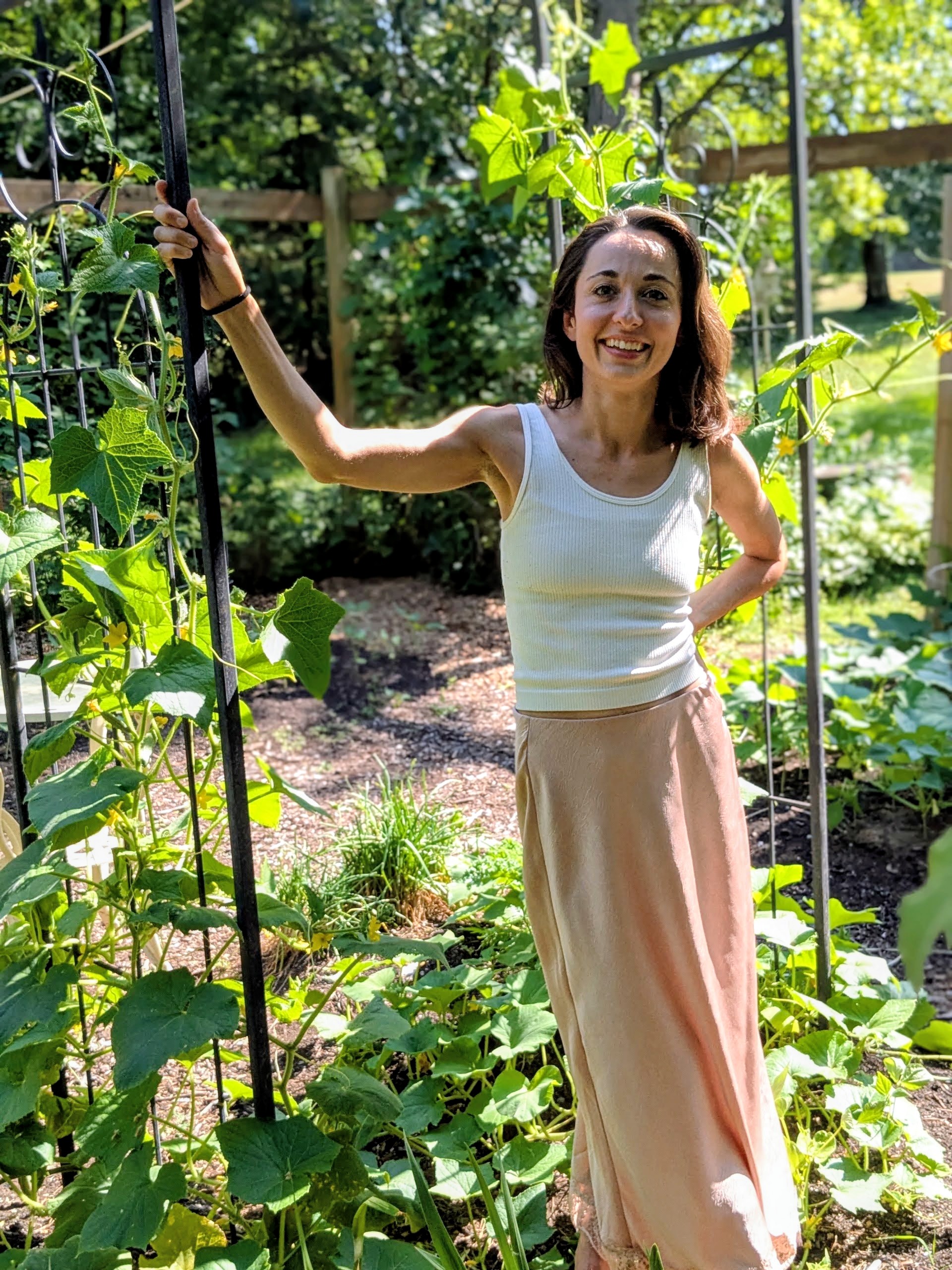
RN, BSN, MS (Human Nutrition)
Care that sees the whole person.
My background spans nursing, public health, and human nutrition. That training taught me to value evidence—but also to see the person behind every behavior.
Eating can be shaped by biology, emotion, stress, habit, access, culture, relationships, and lived experience. There’s rarely just one reason we eat the way we do.
Your Peaceful Plate exists to help women feel informed, supported, and more at home in their own choices.
Why this work
Because understanding changes everything.
I've always believed that nutrition matters. But the more I learned, the more I realized that knowing what to eat is only one part of the picture.
So many women already have plenty of nutrition knowledge, yet still find themselves struggling with food, caught between guilt, rules, cravings, and the feeling that they need more willpower.
I became curious about that gap. Why wasn't nutrition knowledge enough? What was really influencing our eating? And what did women actually need to create meaningful, lasting change?
I wanted to understand the whole picture—not just the food itself, but the biology, emotions, habits, environments, and experiences that shape our choices.
That curiosity became the foundation of Your Peaceful Plate.
Because women deserve more than another set of food rules. They deserve the understanding, practical tools, and support to nourish themselves, trust their choices, and build a relationship with food that genuinely works for their lives.
What I believe
You don’t need to earn your food.
Food isn’t morally good or bad.
Your eating behavior isn’t a character flaw.
Your body deserves nourishment.
Curiosity creates more change than shame.
Food peace does not mean eating perfectly.
Let’s begin gently
Your first step can be small.
Start with a free guide to explore what may be behind the moments you reach for food—and begin noticing what you truly need.
Get the free guide →